Business & Operations
Pet Business Insurance in Australia: A Complete Guide for Pet Professionals
A practical guide to insurance for Australian dog walkers, groomers, pet sitters, boarders, trainers, daycares and pet transport businesses.
By PetBiz Editorial Team · Published 4 September 2026 · Last reviewed 4 September 2026 · 24 min read
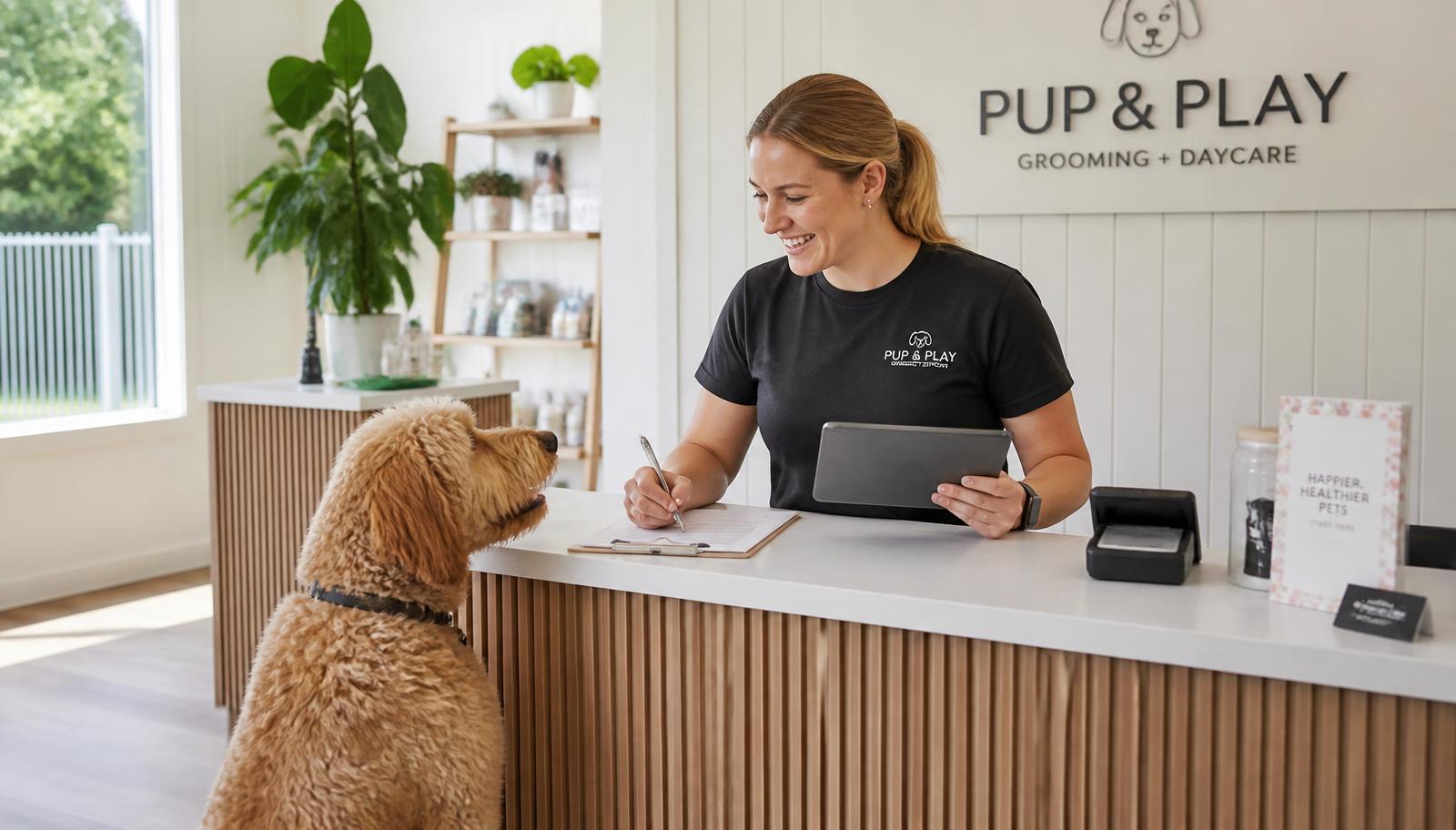
Running a pet business means accepting responsibility for more than appointments and invoices. You may be trusted with an animal, a client's house keys, access to private property, specialised equipment, a vehicle and the safety of staff, customers and members of the public—all in the same working day.
The right insurance cannot prevent an accident, but it can reduce the financial damage when something goes wrong. The difficult part is working out which policies match the risks in your business. A home-based groomer, a group dog walker and a boarding facility do not have the same exposures, even though all three work with pets.
This guide explains the main types of pet business insurance in Australia, how they differ, what to compare and what information to disclose when requesting a quote. It is written for dog walkers, pet sitters, groomers, trainers and behaviourists, daycare and boarding operators, pet transport providers, microchipping practitioners and other eligible pet professionals.
What is pet business insurance?
Pet business insurance is a general term for one or more business insurance policies arranged around the risks of providing pet-related services. It is not a single standard policy and it is not the same as consumer pet health insurance.
Pet health insurance is usually purchased by an owner to help with eligible veterinary expenses for their own animal. Pet business insurance is purchased by a business to address risks arising from its operations—for example, a claim that a client, member of the public, third party's property or an animal in the business's care was harmed.
A pet business package may combine several covers, but a familiar label such as "pet professional insurance" does not tell you exactly what is insured. The schedule, wording, endorsements and exclusions determine the actual cover.
Is pet business insurance compulsory in Australia?
There is no single Australian rule that makes one identical insurance package compulsory for every pet business.
Requirements depend on your location, business structure, activities and staffing. The Australian Government's business insurance guidance explains that some insurance may be required by law while other cover is optional. Common legal requirements can include workers compensation when a business has employees, compulsory third-party personal injury insurance for registered vehicles, and public liability for certain occupations or circumstances in some jurisdictions.
Even when a policy is not imposed by a general law, you may still need it to satisfy:
- a council permit or animal-establishment approval;
- a commercial lease or home-business approval;
- a client, franchise, marketplace or subcontracting agreement;
- access conditions for a venue, market, park, show or training facility;
- a lender or equipment finance agreement; or
- a professional association's membership conditions.
That distinction matters. "Not universally required by law" does not mean "unnecessary." A serious claim can still produce veterinary expenses, legal defence costs, compensation demands, damaged equipment or lost trading income.
Check the rules that apply to every state, territory and council area in which you operate. A business that crosses council or state borders may have more than one set of obligations.
The three covers pet professionals ask about most
Public liability, care, custody and control, and professional indemnity address different risks. One should not be assumed to replace another.
| Type of cover | Main question it addresses | Pet-business example | Important point to check |
|---|---|---|---|
| Public liability | Has a third party been injured or has their property been damaged because of the business? | A customer trips over a grooming lead and alleges negligence | Who counts as a third party, where cover applies and whether all activities are declared |
| Care, custody and control (CCC) | Has a client's animal been injured, lost or killed while entrusted to the business? | A dog escapes during a walk and is injured | Animal types, per-animal or aggregate limits, group size, off-lead conditions and exclusions |
| Professional indemnity | Has a client suffered loss and alleged negligent advice, an error or an omission in a professional service? | A client alleges that inappropriate training advice led to loss or injury | Which services and advice are included, retroactive cover and notification requirements |
1. Public liability insurance
Public liability insurance may respond when a business is legally liable for personal injury to another person or damage to third-party property. It can also include eligible legal defence costs, subject to the policy.
Examples may include:
- a client slips on a wet salon floor;
- a dog being walked knocks over a cyclist;
- a pet damages property at a client's home;
- a visitor is injured at a boarding or daycare facility; or
- the business accidentally damages a venue while running a training class.
Public liability is broad, but it is not a promise that every animal-related incident is covered. A standard business policy may restrict or exclude property—and potentially animals—while they are in the insured's care, custody or control. That is why a pet professional should ask specifically how the policy treats client animals.
Limits are commonly selected according to the business's contracts and exposure. Do not choose a figure because it appears popular online. Check the minimum required by your landlord, council, venue, platform and major clients, then discuss whether it is adequate for your risk.
2. Care, custody and control insurance
Care, custody and control cover—sometimes described as animal bailee liability or offered as an extension—is designed for certain claims involving animals entrusted to the business. Depending on the policy and event, it may respond to eligible veterinary expenses, compensation or legal costs where the business is legally liable for accidental injury, loss, escape or death.
It can be relevant whenever you take physical responsibility for another person's pet, including while:
- walking or exercising the animal;
- grooming, bathing or handling it;
- pet sitting in the owner's home;
- boarding it at your premises;
- supervising daycare or playgroups;
- conducting training or behaviour sessions; or
- transporting it between locations.
This is one of the most easily misunderstood areas of pet business insurance. The words "public liability included" do not necessarily confirm that animals in your care are insured. Ask for the answer in writing and identify the relevant clause, endorsement and limit.
Pet professionals who want to discuss specialist pet business insurance in Australia can contact Pet Business Insurance, which helps eligible businesses arrange public liability, professional indemnity and care, custody and control cover.
Questions worth asking include:
- Is the limit applied to each animal, each event or the whole policy period?
- Are veterinary costs only covered when the business is legally liable?
- Are loss, escape, theft and death treated differently from injury?
- Does the policy cover animals during transport or collection and drop-off?
- Are off-lead activities permitted, and under what conditions?
- Is there a maximum number of animals per handler or at the premises?
- Are particular species, breeds, ages, health conditions or behaviours excluded?
- Does cover continue when an employee or subcontractor is handling the animal?
- Are emergency boarding, medication administration or overnight stays declared activities?
3. Professional indemnity insurance
Professional indemnity insurance may cover eligible claims alleging a mistake, omission, breach of professional duty or negligent advice or services. The government's business guidance describes professional indemnity as cover that can help with legal action arising from professional advice or services.
This may be particularly relevant for:
- dog trainers and animal behaviourists whose recommendations influence how owners manage animals;
- groomers providing specialised handling or treatment services;
- microchipping practitioners;
- pet nutrition or wellness consultants working within their qualifications;
- pet sitters or boarders responsible for medication or detailed care instructions; and
- businesses that prepare written behaviour, safety or care plans.
The dividing line between a physical service and professional advice is not always obvious. A trainer may demonstrate a technique and provide a written plan. A groomer may recommend a product or handling approach. Tell the insurer what you actually do rather than choosing cover from your job title alone.
Professional indemnity policies may be written on a "claims made" basis. In simple terms, the timing of when a claim is made and notified can matter, not only when the work occurred. Ask about the retroactive date, continuous cover, circumstances that must be notified and any run-off needs if you close or sell the business.
Other insurance a pet business may need
The core three covers do not address every operational risk. The following policies or extensions may be relevant depending on your model.
Workers compensation
Employers generally must obtain workers compensation insurance from an authorised insurer. The details vary between states and territories, and some contractor arrangements may also be captured by local rules.
Workers compensation can cover eligible work-related injury or illness affecting staff. In a pet business, exposures can include bites, scratches, lifting injuries, slips, vehicle incidents, chemical exposure, noise and repetitive strain.
Sole traders are not normally covered as employees by workers compensation for themselves. The Australian Government recommends considering personal accident, illness, disability or income protection arrangements instead. Confirm the position for company directors, working partners, family members, volunteers, trainees and contractors with the relevant authority.
Safe Work Australia lists the workers compensation authority for each jurisdiction. It does not administer individual schemes, so take detailed questions to your local authority.
Product liability
Product liability may be relevant if you manufacture, import, sell, supply or sometimes modify products. Think beyond a full retail store. A groomer may sell shampoo, a trainer may sell leads, a sitter may provide treats, and a daycare may offer branded toys.
A claim could allege that a product caused injury, illness or property damage. Ask whether product liability is included with public liability, which products and sales channels are declared, and whether imported or private-label goods have different conditions.
Property, contents and portable equipment
Clippers, dryers, hydrobaths, crates, training equipment, computers, point-of-sale devices and stock can be expensive to replace. Property or contents cover may help with insured events at a specified premises, while portable equipment cover may be needed for items taken between jobs.
Check whether the settlement basis is replacement value or an amount reduced for age and depreciation. Also review security conditions, unattended-vehicle restrictions, flood and storm definitions, accidental damage, machinery breakdown and whether client property is included.
Commercial motor and pet transport
A personal motor policy may not cover business use or the transport of client animals. Compulsory third-party insurance associated with vehicle registration addresses personal injury under the relevant state or territory scheme; it is not a substitute for cover for vehicle damage, equipment, animals or business liability.
Tell the motor insurer if you use a car or van for collections, drop-offs, mobile grooming, dog walking or pet taxi services. Ask how cages, fit-outs, signage, tools and animals in transit are treated. If employees or contractors drive, confirm who is authorised and whether age or licence restrictions apply.
Business interruption
Business interruption insurance may help with ongoing costs or lost income when an insured event disrupts operations. It does not respond simply because revenue falls; it usually depends on an insured trigger under the policy.
For a salon, boarding facility or daycare, consider how long it could take to repair premises, replace specialised equipment, obtain council approval or restore utilities. Check the indemnity period, waiting period, gross profit calculation, additional increased cost of working and any disease or prevention-of-access exclusions.
Cyber insurance and crime cover
Pet businesses store names, addresses, phone numbers, booking histories, payment information, alarm instructions and sometimes house-key details. A compromised email account, fraudulent invoice, ransomware incident or booking-system outage can create both cost and reputational damage.
Cyber insurance may cover certain response, recovery, interruption, extortion, privacy and liability costs. Employee dishonesty or crime cover may address some theft or fraud risks. Coverage differs widely, so ask about social engineering, funds transfer fraud, third-party booking platforms and minimum security controls such as multifactor authentication and backups.
Personal accident and income protection
If the business depends on one owner-operator, the owner being unable to work may be the most serious financial risk of all. Public liability does not replace the owner's income after a bite, back injury or illness. A sole trader should separately consider personal accident, sickness, income protection, life or total and permanent disability cover with a qualified adviser.
Which cover should each type of pet business consider?
No table can replace an individual assessment, but this provides a useful starting point.
| Business type | Common exposures to discuss | Covers commonly considered |
|---|---|---|
| Dog walker | Escape, dog bite, group control, off-lead exercise, keys, driving between jobs | Public liability, CCC, commercial motor, portable equipment, personal accident; workers compensation if applicable |
| Pet sitter or house sitter | Animal injury, lost keys, damage at a client's home, medication, overnight care | Public liability, CCC, professional indemnity where relevant, key/lock replacement extension, cyber, personal accident |
| Home or commercial boarder | Escape, fights, illness, overnight supervision, property visitors, fire or storm | Public liability, CCC, property/contents, business interruption, workers compensation and commercial motor where relevant |
| Doggy daycare | Multiple animals, fights, staff injuries, customer traffic, facility damage | Public liability, CCC, workers compensation, property, equipment, business interruption, cyber |
| Mobile or salon groomer | Cuts, burns, slips, chemical reactions, equipment damage, vehicle use | Public liability, CCC, professional indemnity where relevant, property/portable equipment, machinery breakdown, commercial motor |
| Trainer or behaviourist | Advice claims, bites, group classes, venue use, client property | Professional indemnity, public liability, CCC, portable equipment, cyber |
| Pet taxi or transport provider | Collision, escape during transfer, heat exposure, fit-out and vehicle damage | Commercial motor, public liability, CCC including transit, property/portable equipment |
| Microchipping practitioner | Procedure-related injury, professional error, equipment and records | Professional indemnity, public liability, CCC, portable equipment, cyber |
| Pet retailer or online seller | Product injury, imported goods, stock loss, customer traffic, cyber events | Product and public liability, property/stock, goods in transit, business interruption, cyber |
The phrase "commonly considered" is deliberate. Whether a cover is necessary or available depends on the activities disclosed and the wording offered.
Risks that are easy to miss
Group walks and off-lead activity
Group size changes the nature of a walking risk. Some policies may set handler ratios, group limits, location rules or off-lead conditions. If your website advertises six-dog off-lead adventures but your application describes only individual lead walks, there may be a serious disclosure problem.
Animals with known behavioural or medical issues
Insurers may ask about declared dangerous dogs, bite histories, aggression, age, illness, vaccination or contagious-disease controls. Do not assume that a client's waiver transfers the risk. Record the owner's disclosures, complete a meet-and-greet or assessment where appropriate, and ask the insurer how the policy treats known conditions.
Medication and specialist services
Administering tablets may be treated differently from injections, wound care or other procedures. Likewise, behavioural modification, nutrition advice, microchipping and grooming performed under sedation can fall outside a basic description of "pet sitting" or "grooming." Disclose each service and stay within your training, licensing and professional scope.
Keys and access to client homes
Replacing a lost key is one cost; re-keying locks, changing access codes and responding to an alleged theft can be much greater. Ask whether lost-key or fidelity-related cover is available and what records or security practices are required.
Subcontractors and casual helpers
A contractor with an ABN is not automatically outside workers compensation rules, and their work is not automatically insured under your liability policy. Check the legal classification with the relevant regulator and confirm whether contractors are insured persons, must carry their own cover or must provide a current certificate of currency.
Home-based operations
Do not assume home insurance covers grooming, boarding, training or client visits. The government's home-based business guidance warns that standard home policies often do not cover business activities and recommends telling the home insurer.
You may also need landlord consent, council approval and specific property or liability cover. Consider noise, waste, wastewater, signage, animal numbers, fencing, fire safety, customer traffic and separation between private and business areas.
New services and side income
Insurance can lag behind a growing business. A walker adds boarding over holidays; a groomer begins selling imported products; a trainer launches online consultations; a sitter hires a casual; a daycare adds transport. Each change can alter the risk. Contact your insurer or broker before—not after—the new service begins.
What might pet business insurance not cover?
Every policy is different. The following are areas to investigate, not a universal list of exclusions:
- deliberate, reckless, criminal or fraudulent acts;
- known circumstances or claims that arose before cover began;
- services, locations, animal types or business entities not disclosed on the policy;
- contractual liability that would not otherwise exist at law;
- fines, penalties and some regulatory investigations;
- communicable disease, parasites or gradual health conditions;
- certain breeds, declared dangerous dogs or animals with known behavioural histories;
- off-lead activity, pack sizes or overnight numbers outside policy conditions;
- poor maintenance, wear and tear, faulty workmanship or failure to follow safety requirements;
- vehicles used for business purposes without appropriate motor cover;
- injury to the business owner, employees or contractors under a public liability policy;
- property or animals in care, custody or control unless specifically insured;
- professional advice where professional indemnity is not included; and
- incidents outside the geographic area or policy period.
Read definitions as closely as exclusions. Terms such as "insured," "employee," "animal," "business," "professional services," "occurrence" and "claim" can control whether the policy responds.
How much does pet business insurance cost in Australia?
There is no reliable one-price answer. A quote is based on the risk presented, the cover selected and the insurer's underwriting criteria at that time.
Factors may include:
- the services you provide and how long you have operated;
- annual turnover and payroll;
- the number and type of animals handled at once;
- whether activities are individual, group, on-lead, off-lead, mobile or overnight;
- premises, council approvals, fencing, security and fire protection;
- employee and contractor numbers, qualifications and experience;
- vehicles, equipment, stock and replacement values;
- the limits, sub-limits and excesses selected;
- claims and incident history;
- geographic area and any interstate work; and
- optional extensions and exclusions.
A cheaper premium is not necessarily better value. Compare the protection retained after limits, sub-limits and exclusions. A low premium can be expensive if the activity most central to your business is outside the wording.
How to compare pet business insurance quotes
Use the same written description of your business for every quote. Otherwise, you may be comparing different risks rather than different prices.
Step 1: Map what your business actually does
List every service, animal type, location and delivery method. Include seasonal and occasional work. Note maximum group and overnight numbers—not just the daily average.
Step 2: Identify non-negotiable requirements
Collect insurance clauses from leases, council permits, venue agreements, platforms and client contracts. Record required limits, interested parties, certificates of currency and territorial conditions.
Step 3: Compare the documents, not only the premium
The Australian Government's guide to managing business insurance recommends reading the Product Disclosure Statement (PDS), including cover, exclusions, definitions, insured events, claim settlement, excess, cancellation rights and information that must be kept current.
For each option, compare:
- the named insured and business description;
- included activities and locations;
- policy limits and sub-limits;
- the excess for each section;
- CCC treatment of injury, illness, escape, loss and death;
- defence costs—inside or outside the limit;
- group size, animal number and handler conditions;
- cover for employees, volunteers and subcontractors;
- transport, collection and delivery;
- retroactive dates and claims-made conditions;
- exclusions and endorsements;
- geographic and jurisdictional limits;
- claim notification steps; and
- cancellation and run-off considerations.
Step 4: Test realistic scenarios
Ask the broker or insurer to explain how the policy may respond to situations that mirror your work. For example:
- A dog slips its collar on a group walk, runs onto a road and is injured.
- Two dogs fight at daycare and both need veterinary treatment.
- A client alleges that a trainer's written advice made aggressive behaviour worse.
- A grooming dryer causes an injury and trading stops while equipment is investigated.
- A pet sitter loses a client's keys and the locks must be replaced.
- An employee is bitten while separating dogs.
- A mobile groomer's van and fitted equipment are damaged in a collision.
Do not rely on a verbal "that should be covered." Ask where the relevant protection, limit and conditions appear in the documents.
Step 5: Check who is providing the financial service
Insurance brokers and authorised representatives should be appropriately authorised. You can search the ASIC Professional Registers by name, licence or representative number. Read the Financial Services Guide and relevant policy documents, and ask how the provider is paid and which insurers or products they can access.
Information to prepare before requesting a quote
A complete first submission can reduce follow-up questions and the risk of accidental non-disclosure. Prepare:
- your legal entity, ABN, trading names and contact details;
- a clear description of every service;
- business commencement date and relevant experience or qualifications;
- current and projected turnover and payroll;
- number of owners, employees, contractors, volunteers and trainees;
- maximum animals per handler, group, vehicle and premises;
- species, breeds and any acceptance restrictions;
- on-lead and off-lead practices;
- operating addresses, service areas and interstate work;
- home-based, mobile, commercial and client-home activities;
- overnight capacity and supervision arrangements;
- medication, grooming, training, transport or microchipping services;
- vehicle details and business use;
- equipment, stock and fit-out values;
- past claims, complaints, losses and known incidents; and
- required limits under contracts, leases or council approvals.
If a question seems ambiguous, ask what it means. Guessing can produce a policy built around an inaccurate version of the business.
Risk management still matters after you are insured
Insurance transfers some financial risk; it does not replace safe operations. Practical controls can reduce incidents and create better evidence if a claim occurs.
Client and animal intake
- Use a written service agreement reviewed for your business and jurisdiction.
- Record emergency contacts, veterinarian details and treatment authority.
- Collect behavioural, bite, escape, medical, allergy and medication history.
- Set vaccination, parasite and communicable-disease requirements where appropriate.
- Confirm who may collect the animal and how identity will be checked.
- Update information regularly rather than relying on a first-visit form forever.
Handling and supervision
- Match animals by size, temperament and play style where relevant.
- Set and enforce safe staff-to-animal or handler-to-dog ratios.
- Use maintained leads, gates, latches, barriers, crates and restraints.
- Define when off-lead activity is allowed and obtain required consent.
- Have isolation, evacuation, extreme-weather and lost-animal procedures.
- Keep staff training and competency records.
Premises and equipment
- Document opening and closing safety checks.
- Maintain flooring, drainage, ventilation, fencing and fire equipment.
- Service grooming, washing, drying and transport equipment.
- Store chemicals, medicines, keys and records securely.
- Keep maintenance logs and photographs of material repairs.
Records and communication
- Record attendance, handover times and the handler responsible.
- Keep signed instructions, consent and service changes.
- Document even minor incidents objectively and promptly.
- Preserve relevant messages, photos, video and witness details.
- Avoid admissions of liability or speculation before obtaining advice.
- Store records securely and follow applicable privacy obligations.
A waiver can help communicate risks and responsibilities, but it is not a substitute for insurance, safe procedures or legal advice. Under the Australian Consumer Law, service providers generally must provide services with due care and skill and take reasonable steps to avoid loss or damage. The ACCC explains these consumer guarantees.
What to do after an incident
Protect life and health first. Then follow a calm, documented process:
- Make the situation safe. Separate animals, stop equipment, secure gates or move people away from danger.
- Arrange appropriate care. Contact emergency services or a veterinarian as needed and follow the owner's documented emergency authority where applicable.
- Notify the owner or affected person. State confirmed facts, immediate actions and the next update time. Avoid blame and speculation.
- Preserve evidence. Save photos, CCTV, booking records, signed forms, equipment and witness details. Write an incident report while memories are fresh.
- Contact the insurer or broker promptly. Policies can impose notification duties or time limits. Report a circumstance that may become a claim when the wording requires it; do not wait for court documents.
- Check other reporting duties. A workplace injury, dog attack, privacy incident, theft or serious safety event may also need to be reported to a regulator, council, police or another authority.
- Do not promise payment or admit liability without advice. You can show empathy and provide care without deciding legal responsibility.
- Review the root cause. Update procedures, training, equipment or client screening while preserving all claim evidence.
Ask the insurer before arranging non-urgent repairs, disposing of damaged equipment or negotiating a settlement. Keep receipts and a record of every conversation.
When should you review your insurance?
Review cover before renewal and whenever the business changes. Common triggers include:
- starting a new service or stopping an old one;
- increasing the number or type of animals accepted;
- employing staff or engaging contractors;
- moving premises or beginning work from home;
- adding overnight boarding, group walks or off-lead services;
- buying a vehicle, fit-out or major equipment;
- selling, importing or private-labelling products;
- expanding into another council area, state or territory;
- changing the legal entity or ownership structure;
- signing a new lease, platform or commercial contract; or
- receiving a complaint, demand or information about a possible claim.
Keep your certificate of currency accessible, but remember that it is evidence of cover at a point in time—not a summary of every term. The full policy documents remain essential.
Pet business insurance FAQs
What insurance does a pet business need in Australia?
The answer depends on the services, location, contracts, staffing and assets. Public liability and care, custody and control are common considerations for animal-handling businesses. Professional indemnity may be relevant for advice or professional services. Employers generally need workers compensation under their jurisdiction's rules. Product liability, motor, property, equipment, cyber and business interruption cover may also be appropriate.
Is pet business insurance the same as pet insurance?
No. Consumer pet insurance generally helps an owner with eligible veterinary expenses for their own animal. Pet business insurance addresses specified risks arising from commercial activities, such as liability to clients or members of the public and certain incidents involving animals entrusted to the business.
Does public liability cover pets in my care?
Do not assume it does. Policies commonly contain terms or exclusions dealing with property in the insured's care, custody or control, and animals may require a specific CCC extension or section. Check the wording and obtain written confirmation for your exact activities.
What is care, custody and control insurance?
It is cover intended for certain claims involving an animal belonging to someone else while the animal is entrusted to the business. Depending on the policy, it may respond to eligible claims involving accidental injury, loss, escape or death, along with specified veterinary, compensation or legal costs.
Do dog walkers need insurance in Australia?
Requirements vary by jurisdiction, council, contract and operating location. Dog walkers commonly consider public liability and CCC cover because they control client animals in public. Group size, off-lead activity, vehicle use, employees and contractors should be disclosed.
Do pet sitters need insurance if they work in the client's home?
Working at a client's home still creates exposures involving the animal, keys, property and third parties. Public liability, CCC and a lost-key or similar extension may be relevant. Sitters who provide professional advice, medication or other specialist services should disclose those activities.
Can I rely on insurance provided by a booking platform?
Read the platform's current policy and terms. Check who is insured, when cover begins and ends, the activities included, excesses, limits, exclusions and whether bookings made outside the platform are covered. Platform protection may not replace your own policy or meet council, lease or client requirements.
Does a client waiver mean I do not need insurance?
No. A waiver does not prevent every claim, remove every legal duty or pay defence costs. Its effectiveness depends on the wording, facts and applicable law. Use agreements as one part of risk management and obtain legal advice on their suitability.
Are subcontractors covered by my policy?
Not automatically. Policies differ on whether subcontractors are insured, treated as third parties or excluded. Your contract may require them to carry their own cover. Also check whether workers compensation laws in your jurisdiction treat a particular contractor as a worker.
Can a home-based grooming or boarding business use home insurance?
Standard home insurance often does not cover business activities. Tell the home insurer and check business, property and liability needs, as well as council or landlord requirements. Never assume a domestic policy covers client animals, customer visits or commercial equipment.
How often should a pet business review its insurance?
At least before each renewal, and sooner whenever services, staff, animal numbers, premises, vehicles, equipment, turnover or contracts change. Notify the insurer or broker promptly about facts or circumstances the policy requires you to disclose.
The bottom line
The best pet business insurance is not the policy with the longest list of headings or the lowest premium. It is cover built around an accurate description of how the business operates.
Start with the risks that distinguish pet work from an ordinary small business: animals entrusted to you, unpredictable behaviour, work at client properties, group handling, transport and advice about care or behaviour. Then add the risks shared by other businesses—staff injuries, products, property, equipment, vehicles, cyber events and interrupted trading.
Most importantly, disclose the details that make your work unique and read the documents. When an animal, client or employee depends on your decisions, "I thought it was covered" is not a risk-management strategy.
Sources and further reading
- Types of business insurance — business.gov.au
- Manage your business insurance — business.gov.au
- Home-based businesses — business.gov.au
- WHS regulators and workers compensation authorities — Safe Work Australia
- Consumer rights and guarantees — Australian Competition and Consumer Commission
- Professional Registers Search — Australian Securities and Investments Commission