Business & Operations
How to Start a Dog Walking Business in Australia: The Complete 2026 Guide
Want to turn your experience with dogs into a reliable local business? This step-by-step Australian guide covers business setup, council rules, pricing, safety, insurance, client onboarding, marketing and sustainable growth.
By PetBiz Editorial Team · Published 4 September 2026 · Last reviewed 4 September 2026 · 34 min read
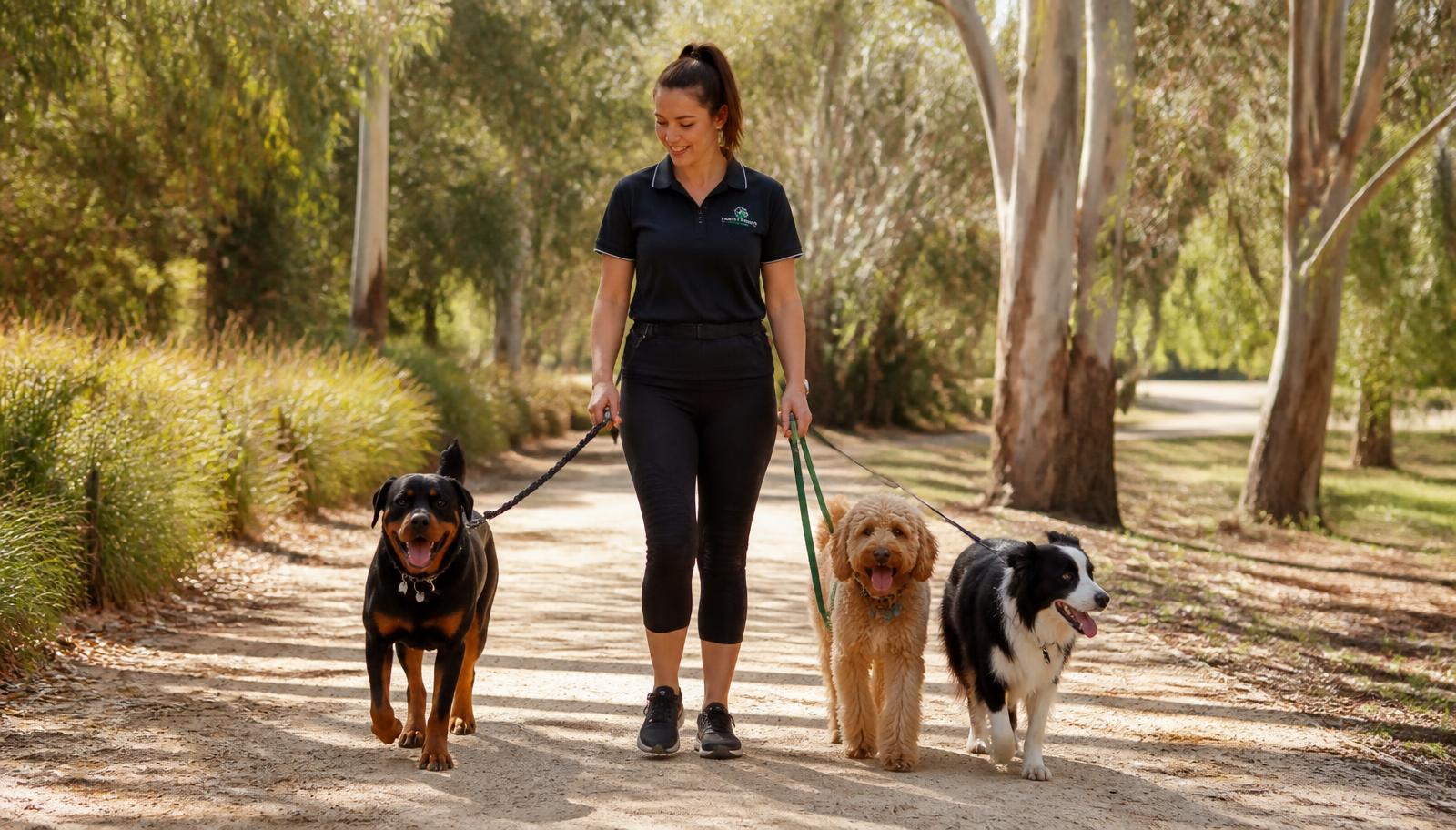
Starting a dog walking business in Australia can look deceptively simple. You love dogs, you buy a few leads, create an Instagram account and wait for bookings. But a professional service is not built on affection alone. It is built on safe handling, reliable systems, realistic pricing, clear client agreements and the judgement to know when a dog, a route or a group is not a safe match.
The opportunity is real. Australia had an estimated 7.3 million dogs in 2025, and dogs lived in almost half of Australian households. Australians also spent an estimated $600 million on dog walking in the 12 months to March 2025. Those figures come from Animal Medicines Australia's national Pets in Australia 2025 report, which also found that 70% of dog owners walked or exercised their dogs at least once a day.
Yet a large market does not automatically make every dog walking business viable. Your result will depend on the density of suitable clients in your service area, travel time between bookings, the number and type of dogs you can handle safely, your costs, your reputation and whether your prices pay for the work clients do not see.
This guide explains how to build the business properly—from choosing a service model and checking local rules to setting prices, assessing dogs, planning emergencies, finding clients and deciding when to hire. It is general information for Australian pet professionals, not legal, veterinary, tax or financial advice. Requirements differ between states, territories and councils, so check the rules that apply to every place where you operate.
Quick answer: what do you need to start a dog walking business in Australia?
At a practical level, most new professional dog walkers should complete these steps before taking unsupervised bookings:
- Define exactly what you will offer, to whom and within which suburbs.
- Assess local demand, competitors, routes, parking and travel time.
- Choose a business structure and apply for an Australian Business Number if required.
- Register your business name if you trade under a name other than your own.
- Check state, territory and council rules, including local leash, dog-control, park-use and permit requirements.
- Arrange insurance appropriate to the way you actually work.
- Build practical skills in canine body language, safe handling, first aid and emergency response.
- Create a service agreement, intake form, veterinary authority, key policy and cancellation policy.
- Set prices from your full costs and capacity rather than copying a competitor.
- Establish systems for bookings, pet records, payments, visit reports and incident documentation.
- Conduct a meet-and-greet and risk assessment before accepting each dog.
- Launch with a small, controlled client list and collect evidence of what works.
There is no single national licence called a “dog walking licence”. That does not mean the activity is unregulated. General business, tax, consumer, privacy, employment, work health and safety, animal welfare and local government rules can all apply. A council may also impose conditions on dogs in public places, commercial use of parks, group sizes or particular reserves. Use the Australian Government's Australian Business Licence and Information Service and contact the relevant council directly rather than relying on advice from a social media group.
Is a dog walking business a good idea in Australia?
A dog walking business can be attractive because it can start with less capital than a boarding facility, daycare centre or grooming salon. A solo operator may already own a suitable phone, vehicle, weather gear and basic equipment. Recurring weekday walks can also create predictable revenue.
Demand is supported by Australia's high level of dog ownership. The 2025 national survey estimated that 49.3% of households had at least one dog and that dog-owning households had 1.4 dogs on average. The same report estimated total pet-related spending at $21.3 billion, including $13.2 billion on dogs. These estimates are based on survey responses and population extrapolations, so they should be treated as market indicators rather than guaranteed sales in a particular suburb.
The business also has difficult economics. A client may pay for a 60-minute walk, but the operator also spends time driving, parking, collecting keys, preparing equipment, messaging the owner, cleaning the vehicle, recording the visit and doing bookkeeping. Weather cancellations, public holidays, illness, vehicle repairs and gaps between bookings can reduce billable capacity. A full calendar can still produce a weak income if routes are inefficient or prices are too low.
The strongest business case usually has four features:
- a compact service area with enough dog-owning households;
- recurring bookings rather than constant one-off work;
- services designed around a clearly defined customer need;
- prices that cover travel, administration, risk and non-billable time.
Before spending heavily on branding or equipment, test those assumptions with real local research.
1. Choose a dog walking business model
“Dog walking” can describe several materially different services. Each has its own safety profile, capacity, equipment needs and price logic. Decide which model you are building before writing a business plan.
Solo dog walks
A solo walk serves one dog, or sometimes multiple dogs from the same household. It suits puppies, senior dogs, dogs with medical or behavioural needs and owners who want undivided attention. Solo services are easier to personalise, but travel time limits daily capacity. The price must reflect the fact that one client funds the whole appointment.
Small-group walks
Group walks can improve revenue per route, but only when dogs are compatible and the walker can maintain effective control. More dogs do not automatically mean more profit. Collection time, loading, transport, introductions, group management and handovers all increase complexity.
A safe group size is not simply the highest number permitted by a council or insurer. It depends on the walker, the dogs, the equipment, the route, the environment and any policy conditions. A quiet pair of familiar dogs on a controlled route is different from a newly assembled group entering a busy off-leash area.
Puppy visits and toilet breaks
Short home visits can be useful for puppies, older dogs and clients who need feeding, medication or a garden break rather than a full walk. Define whether the service includes cleaning accidents, feeding, training reinforcement or medication. These extras affect time, competence and insurance.
A useful starting position
Many new operators are better served by beginning with solo or same-household walks in a small area. This gives you time to refine intake, route planning, reports and emergency processes. Add group services only after you have reliable assessment criteria, compatible clients, suitable transport and explicit insurance cover.
2. Define your ideal client and service area
“Every dog owner in my city” is not a useful target market. A practical ideal-client profile makes pricing, scheduling and marketing easier.
Consider variables such as:
- suburb and distance from your route centre;
- preferred days and times;
- recurring versus occasional need;
- dog size, age and activity level;
- solo or group suitability;
- on-lead or off-lead expectations;
- owner communication preferences;
- access requirements for apartments or gated buildings;
- transport requirements;
- behaviours or medical needs you are trained to manage.
A positioning statement could be as specific as: “Reliable weekday solo walks for older dogs and busy professionals within five kilometres of Carlton,” or “Structured small-group enrichment walks for social adult dogs in Newcastle's inner suburbs.” Specificity helps the right clients recognise themselves.
Map the real operating area
Draw a proposed service boundary and test common journeys during the hours you expect to work. Record:
- driving time, including school and commuter traffic;
- parking availability and restrictions;
- apartment collection time;
- access to shaded, low-traffic routes;
- off-leash and on-leash rules;
- drinking water, bins and shelter;
- mobile reception;
- nearby veterinary clinics and emergency hospitals;
- flood, bushfire, extreme heat and storm exposure.
A broad territory may sound customer-friendly, but it can destroy capacity. If two 60-minute services require a total of 50 minutes of driving and 20 minutes of handover and reporting, the business has sold two hours while consuming more than three. A tight route often matters more than a large number of enquiries.
Research competitors without copying them
Review local walkers, sitters, daycare operators and marketplaces. Note the clients they address, services, durations, booking rules, coverage areas, review themes and apparent availability. Do not treat their advertised price as proof that it is profitable.
Then speak to potential clients. Ask what currently happens when they cannot walk their dog, what makes them trust a provider, what information they expect after a service, which days are difficult and why they have stopped using a previous provider. Ten detailed local conversations are more useful than a generic national market statistic.
3. Set up the business correctly
Choose a structure
Common Australian structures include sole trader, partnership, company and trust. A sole trader structure is relatively simple and gives the owner control, but the person is generally responsible for business debts and losses. A company is a separate legal entity with greater setup, reporting and governance obligations. Structure affects tax, administration, control and potential liability; it does not replace insurance.
The Australian Government provides a business structure comparison. Obtain accounting or legal advice when the choice is not clear, particularly if you have a business partner, significant assets, employees or ambitious growth plans.
Apply for an ABN
Most businesses need an Australian Business Number. Applying for an ABN through the official Australian Government service is free. Be cautious of commercial websites that charge to submit a registration you could make directly.
Register the business name
If you trade under a name other than your own legal name, you generally need to register it. Registration of a business name does not itself give the same protection as a trade mark. Search existing business names, domain names, social handles and the IP Australia trade mark database before investing in signs, uniforms or vehicle graphics.
Separate business finances
Even when a sole trader is not required to have a separate business bank account, separation makes reconciliation, tax preparation and performance tracking much easier. Use a dedicated account and payment process. Record every sale, refund, fee and expense.
Register for relevant taxes
GST registration is generally required when a business has, or expects to have, GST turnover of $75,000 or more. Registration can be voluntary below the threshold. The rules for calculating GST turnover and the consequences of registration deserve professional advice; do not wait until after crossing the threshold to investigate. See the Australian Taxation Office's GST registration guidance.
The ATO generally requires business records to be kept for at least five years, although particular records can have different periods. Keep invoices, receipts, mileage or vehicle records, payment reports and supporting documents in a consistent system.
4. Check licences, council rules and public-space restrictions
There is no safe universal checklist for local dog-walking rules because councils manage public spaces differently. Check every council in which you collect, transport or walk dogs.
Questions to ask include:
- Is commercial dog walking allowed in council parks and reserves?
- Is a permit, registration or park-use consent required?
- Is there a maximum number of dogs one person may control?
- Are different limits imposed in off-leash areas?
- Must dogs be registered or microchipped before using particular spaces?
- Are professional walkers required to carry evidence of insurance?
- Are some reserves, beaches, sports grounds or conservation areas prohibited?
- What leash length or effective-control rules apply?
- Are there special rules for declared dangerous, menacing or restricted dogs?
- Must dog waste be collected and carried out?
- Do parking, signage or home-business rules affect the service?
Local rules can change. Read signs at the location as well as website information. For example, Brisbane City Council states that dogs must be securely on a lead in public unless they are in a designated signed off-leash area, and that the handler must be able to physically control the dog. Other councils may use different wording, limits and enforcement approaches.
Do not assume the owner has checked these matters. The person handling the dog can have obligations in public even though the client owns the animal.
Home-based operations
If you run administration from home, store equipment there, receive clients or keep dogs there between services, home-business, planning, tenancy, strata and insurance issues may arise. The Australian Government notes that a home-based business may require landlord approval, council approval, licences or permits. Ordinary home insurance may not cover business equipment, customer visits or animals in commercial care.
5. Build professional dog-handling competence
A new operator does not need to present as a veterinarian or behaviourist. They do need enough competence to recognise risk, follow client and veterinary instructions, handle dogs humanely and stay within their scope.
Useful education includes:
- canine body language and stress signals;
- safe lead, harness and gate handling;
- dog-to-dog introductions;
- humane, reward-based handling;
- canine first aid and CPR;
- heat stress and dehydration;
- bite prevention and break-up procedures;
- transport and restraint;
- medication procedures if offered;
- puppy, senior and brachycephalic dog needs;
- emergency communication and incident reporting;
- work health and safety, manual handling and working alone.
Choose training with practical assessment, credible instructors and content appropriate to your service. Keep certificates and refresher dates. A qualification is not a substitute for supervised experience with varied dogs, and years of pet ownership are not automatically the same as professional competence.
Know your scope
If you are not qualified to diagnose pain, prescribe exercise, treat a medical condition or develop a behaviour-modification plan, do not imply that you are. Refer clients to a veterinarian or appropriately qualified professional when the dog shows unexplained exercise intolerance, pain, aggression, severe fear, collapse, repeated lameness or another issue outside routine walking.
Clear scope is also good marketing. Trust grows when a professional can say, “That needs veterinary advice before I continue,” rather than improvising.
6. Arrange insurance for the real service you provide
Insurance should match the facts of your operation, not just the label “dog walker”. Public liability and care, custody and control cover are common considerations, but terms, exclusions, limits and excesses differ.
Depending on the business, you may also need to consider:
- professional indemnity for advice or specialist professional services;
- workers compensation when you employ or engage people covered by the relevant scheme;
- commercial motor or appropriate business use of a vehicle;
- tools, portable equipment or property cover;
- cyber cover;
- personal accident or income protection;
- business interruption;
- lost-key or lock-replacement extensions.
Tell the broker or insurer about group sizes, off-leash activities, transport, dog running, medication, pet sitting, employees, contractors, volunteers and work at client homes. Ask how the policy treats an animal that escapes, is injured, becomes ill, causes injury, damages property or requires emergency veterinary care. Confirm whether defence costs sit inside or outside the liability limit and whether subcontractors are covered.
PetBiz's existing guide to pet business insurance in Australia provides a detailed comparison checklist. Read the policy documents and obtain advice for your circumstances; a certificate of currency is not a complete explanation of cover.
7. Create a practical risk-management system
Risk management is not a folder prepared once for an insurer. It is how you decide which dogs to accept, what equipment to use, where to walk, when to cancel and how to respond when conditions change.
Under model work health and safety laws, a person conducting a business or undertaking has a primary duty to ensure, so far as reasonably practicable, the health and safety of workers and other people affected by the work. Self-employed people can hold duties as both a business operator and a worker. Work health and safety is regulated by the Commonwealth, states and territories, so consult your local WHS regulator.
Build a hazard register
List hazards for each stage of service, not only the walk itself.
At collection: unsecured front doors, unfamiliar people, resource guarding near the lead, alarm systems, slippery floors, stairs, keys, traffic and other animals in the home.
During transport: loading and unloading, loose dogs, incompatible dogs, heat, ventilation, vehicle failure, collision, cleaning chemicals and escape at doors.
On the route: traffic, cyclists, children, wildlife, broken glass, baits, snakes, foxtails or grass seeds, storms, bushfire smoke, floodwater, hot surfaces, aggressive dogs and poor mobile reception.
For the worker: bites, falls, repetitive strain, sun exposure, heat, cold, fatigue, driving, manual handling, working alone and hostile interactions.
For each hazard, record who may be harmed, existing controls, additional action, responsibility and review date. The aim is not paperwork for its own sake. It is a repeatable decision process.
Use a route plan
A route plan can record distance, terrain, shade, water, road crossings, dog restrictions, escape points, known triggers, phone coverage and the nearest safe pickup point. Have alternatives for high heat, storms, flooding, events and maintenance closures.
Set equipment standards
Define which collars, harnesses and leads you accept. Inspect client-supplied equipment at intake and before each service. Carry backup attachment equipment where appropriate, but obtain owner consent before changing or adding gear. Avoid connecting several unfamiliar dogs to a single point until you have assessed the consequences of pulling, tangling or equipment failure.
A basic field kit may include water, a collapsible bowl, waste bags, first-aid supplies, a charged phone, portable power, emergency contacts, a spare lead, weather protection, high-visibility gear, towels and cleaning supplies. The exact kit should follow your training and risk assessment.
Plan for working alone
Solo workers should have a check-in process. A nominated person should know the day's route or appointments, how to recognise a missed check-in and when to escalate. Avoid storing sensitive client information in an insecure shared message. Use controlled access and provide only what an emergency contact needs.
8. Create a weather and heat policy before summer
Weather decisions are easier when the rule is written before a client is disappointed. Do not promise that every walk will proceed regardless of conditions.
RSPCA Australia describes heatstroke as a serious condition that can lead to organ failure or death. Warning signs can include relentless panting, drooling, agitation, abnormal gum colour, breathing distress, vomiting, diarrhoea, weakness, tremors, seizures or collapse. Its hot-weather guidance recommends avoiding exercise in extreme heat, using the cooler parts of the day and avoiding hot sand, concrete and asphalt. Flat-faced dogs, animals with certain medical conditions, thick-coated animals and very young or old animals can be at greater risk.
Your policy should consider more than the forecast maximum. Humidity, sun, shade, surface temperature, smoke, dog health, breed, body condition, acclimatisation, intensity and transport conditions all matter.
Define:
- who decides to modify or cancel;
- the information used for the decision;
- whether the service becomes a shorter shaded walk, toilet break or indoor enrichment visit;
- how and when the client is notified;
- whether fees or credits change;
- how bushfire, lightning, flooding, poor air quality and severe storms are handled;
- what happens if the dog shows distress during the service.
If heatstroke is suspected, follow current veterinary first-aid guidance and seek veterinary attention immediately. Do not let an internet article replace practical first-aid training or a veterinarian's direction.
9. Design a thorough client intake process
The meet-and-greet is an assessment, not a sales formality. A booking should be accepted only after you have enough information to make a safe decision.
Owner and access information
Collect the owner's name, contact details, service address, emergency contact, authorised contacts, access method and any household safety information. Record whether anyone may be home, whether workers or children are expected, and which pets may be loose.
Dog profile
Record:
- name, age, sex, breed or type and identifying features;
- microchip and council registration status where relevant;
- veterinarian and preferred emergency clinic;
- vaccination and parasite-control information relevant to the service;
- health conditions, allergies, recent surgery and mobility limits;
- medicines and exact instructions;
- feeding and water instructions;
- collar, harness and lead details;
- recall and escape history;
- bite, snap, fight or guarding history;
- fear triggers and known reactions;
- behaviour around dogs, people, children, bikes, wildlife and vehicles;
- vehicle and crate experience;
- cues used by the owner;
- approved treats and food restrictions;
- whether the dog is desexed, in season or subject to special legal controls.
Ask behaviour questions neutrally. “Has your dog ever bitten?” can produce an embarrassed “no”. More specific questions—“Has your dog ever made tooth contact with a person or animal, even without breaking skin?” and “What happens when an unfamiliar dog approaches on lead?”—are more informative.
Observe the dog
Watch how the dog responds to your arrival, handling equipment, doorway transitions, passing dogs and changes in distance. Do not force contact. One calm meet-and-greet does not prove a dog is safe in every setting, but signs of severe fear, guarding or poor recovery should change the plan.
For group services, use a staged assessment. Start with parallel movement and adequate distance in a neutral or low-pressure environment. Avoid introducing several new dogs at once. Compatibility must be reviewed as dogs mature, recover from illness or experience changes at home.
Run a trial
A paid solo trial allows you to test access, equipment, route behaviour, communication and timing without the added pressure of a group. Tell the owner that acceptance is provisional until the trial is complete. Record objective observations rather than labels such as “dominant” or “bad”.
10. Use clear client documents
A professional document set helps both sides understand the service. It also reduces hurried decisions during an emergency. Have a lawyer review documents for your services and jurisdictions.
Service agreement
The agreement may cover:
- parties and contact details;
- service description, duration and location;
- booking and confirmation process;
- price, GST status, payment timing and overdue accounts;
- cancellation, rescheduling and public holidays;
- access, keys, alarms and lockouts;
- owner disclosure obligations;
- equipment requirements;
- on-lead, off-lead and transport consent;
- group-walk consent and compatibility decisions;
- weather modifications;
- photography and marketing consent as a separate choice;
- emergency contacts and veterinary authority;
- medication or feeding scope;
- incident communication;
- termination or refusal of service;
- complaint handling;
- privacy and record retention;
- liability provisions prepared for the applicable law.
Australian Consumer Law gives consumers automatic guarantees when they buy many services. Services generally must be provided with due care and skill, be fit for a disclosed purpose and be supplied within a reasonable time when no time is agreed. A contract or waiver cannot simply remove consumer rights. Review the ACCC's consumer guarantees guidance and obtain legal advice rather than copying terms from another walker.
Veterinary treatment authority
Record the preferred veterinarian, emergency clinic, owner and backup contact sequence, transport authority, financial limit or decision process and known treatment restrictions. A nominated dollar limit can be difficult in a true emergency, so ask a lawyer and veterinarian how best to document authority in your situation.
The form should not encourage the walker to diagnose or exceed training. Its purpose is to reduce delay while professional veterinary advice is sought.
Key and property-access policy
Record how keys, fobs and codes are received, labelled, stored, used, returned and destroyed. Avoid attaching a full client name and street address to a key. Log possession and restrict staff access. Define what happens if a key is lost or access fails.
Photo and media consent
Permission to send a service photo is not necessarily permission to publish it. Use a separate, optional marketing consent and allow the owner to withdraw it prospectively. Check images for house numbers, school uniforms, faces, vehicle plates, location data and other identifying information before posting.
11. Protect client information
Dog walkers can hold names, home addresses, phone numbers, routines, access codes, key records, travel dates, payment information and details showing when a home is empty. That combination deserves careful protection.
Some small businesses with annual turnover of $3 million or less may be exempt from the federal Privacy Act, but exceptions apply, and other contractual, state or territory obligations may still be relevant. The OAIC provides a small-business privacy guide to help determine whether the Act applies.
Whether legally required or not, sensible controls include:
- collect only information needed for a defined purpose;
- explain what is collected, why and who receives it;
- use unique passwords and multi-factor authentication;
- restrict worker access to current assignments;
- avoid carrying a complete client list on an unlocked device;
- keep key identifiers separate from addresses;
- review access when a worker leaves;
- back up essential records securely;
- define retention and secure-deletion periods;
- maintain a data-breach response plan.
Do not paste detailed client or pet records into a public artificial-intelligence service without understanding its terms, privacy settings and your authority to disclose the information.
12. Price dog walking services for sustainability
The right price is not the cheapest amount that wins a booking. It is the amount that allows you to deliver the promised service safely, pay yourself, maintain equipment, meet obligations and remain available next month.
Start with required annual revenue
Use this basic planning formula:
Then estimate realistic annual billable capacity. Do not use 52 perfect weeks. Allow for leave, illness, training, administration, public holidays, cancellations and seasonal demand.
This is a planning figure, not necessarily the public price of a one-hour walk. Travel, handover and reporting consume time too.
Understand the travel-time trap
Consider two simplified examples before vehicle and other costs:
| Service design | Customer revenue | Total working time | Gross revenue per working hour |
|---|---|---|---|
| One 60-minute solo walk at $38, plus 30 minutes travel and admin | $38 | 1.5 hours | $25.33 |
| Four compatible dogs at $28 each on a 60-minute group walk, plus 45 minutes collection, travel and admin | $112 | 1.75 hours | $64.00 |
The table does not mean a group of four is always appropriate or that these are recommended prices. It shows why route design and safe capacity matter. Group walking brings additional vehicle, equipment, screening and incident risk. A solo operator can also improve economics by clustering same-building or same-street clients, charging travel zones or offering shorter visits.
Calculate the cost of a service
Include a reasonable allocation for:
- your labour, including collection and reporting;
- vehicle fuel, maintenance, tyres, cleaning and depreciation;
- public transport or parking;
- insurance;
- software, phone and payment fees;
- leads, harnesses, towels, first-aid and weather equipment;
- uniforms and protective gear;
- bookkeeping, accounting and legal work;
- training and certification;
- marketing;
- refunds, bad debts and failed access;
- leave and sick time;
- contingency and profit.
If you employ staff, include award or agreement pay, casual loading or leave, superannuation, workers compensation, payroll administration, training, travel time and other applicable entitlements. The amount paid to a worker is not the full cost of employing them.
Build a simple price architecture
A clear menu might include:
- 20- or 30-minute puppy or comfort visit;
- 45-minute solo walk;
- 60-minute solo walk;
- same-household additional dog;
- assessed small-group walk;
- extended adventure session;
- weekend or public-holiday service;
- distance or outer-zone charge;
- late cancellation or failed-access fee.
Avoid a maze of micro-fees. Customers should be able to understand the likely total before booking.
Use discounts carefully
A recurring-booking price can make sense when it improves route density and reduces acquisition costs. A discount that merely reduces revenue without changing costs does not. Packages paid in advance also create refund, expiry, accounting and cash-flow obligations. State the terms clearly and ensure they comply with consumer law.
Review prices on a schedule
Review at least annually and when fuel, wages, insurance, travel zones, service duration, group size or tax status changes. Give reasonable notice. Explain the value and service standard rather than apologising for operating a sustainable business.
13. Set up bookings, payments and service records
The client experience begins before the dog leaves the house. Make it easy to enquire, provide information, approve terms, book, pay and receive an update.
Use one source of truth
Important information should not be scattered across direct messages, paper notes, email and memory. Maintain a current pet profile with owner contacts, emergency details, veterinary information, access instructions, behaviour notes, equipment and permissions.
PetBiz provides free business software for Australian dog walkers, including bookings, pet records, client updates and safety documentation. Whatever system you choose, test permissions, backups, mobile access and what happens when reception fails.
Establish a booking rule
Define when a request becomes confirmed. Is it confirmed when the client submits it, when you accept it, or when payment is made? Avoid ambiguous messages such as “should be fine”. Send a clear confirmation with date, arrival window, service, dog, price and any preparation needed.
Decide how payments work
Common options include payment at booking, weekly invoices, recurring card payments or prepaid packages. Consider payment fees, failed payments, chargebacks, refunds, GST invoices and reconciliation. Do not store card details yourself unless you understand and meet the relevant security obligations; use a reputable payment provider.
Send useful visit reports
A report can confirm arrival and completion, route or activity, toileting, water, behaviour, unusual observations and a photo if permitted. Keep language factual. “Milo barked and lunged twice when a dog passed within approximately three metres; we crossed the road and he settled within one minute” is more useful than “Milo was aggressive today”.
Reports reassure clients and create a record of care. They should not make medical diagnoses or disclose another client's information.
14. Develop standard operating procedures
Standard operating procedures help you provide consistent care when busy, tired or working with a team. Keep them short enough to use.
Core procedures may include:
- new enquiry and screening;
- meet-and-greet and trial walk;
- home entry and exit;
- collar, harness and lead checks;
- vehicle loading, restraint and unloading;
- group matching and maximum numbers;
- medication and feeding, if offered;
- weather changes and cancellation;
- missing or escaped dog;
- bite, fight or injury;
- heat stress and other medical emergency;
- vehicle breakdown or collision;
- lost key or failed access;
- client complaint;
- worker check-in and missed check-in;
- incident recording and evidence preservation;
- privacy or device incident;
- cleaning and disease-control measures.
The two-door rule
Many escapes occur during transitions. Create a rule that one secure barrier is confirmed before another is opened wherever the property allows it. Confirm the dog is attached to the handler before opening an external door or vehicle door. Do not assume a gate latched because it sounded closed.
Count at every transition
When handling more than one dog, count and identify animals before leaving a property, before moving the vehicle, after unloading, before leaving a walking area, after reloading and at each return. A written run sheet can prevent reliance on memory.
Practise emergency scenarios
Talk through and rehearse plausible incidents. Who calls the owner? Which clinic is open? Who retrieves the other dogs if one needs a vet? How does a relief person access information? How will you describe a missing dog accurately? A plan first encountered during an emergency is not a tested plan.
15. Market a dog walking business locally
Most walkers do not need national reach. They need to become the most credible relevant option in a manageable local area.
Build a trustworthy website
A useful website answers the questions a careful owner asks:
- Who runs the business?
- Which suburbs are covered?
- What services and durations are available?
- Are walks solo, group, on-lead or off-lead?
- How are dogs assessed?
- What training and insurance does the provider hold?
- What happens in hot weather or an emergency?
- How does booking and cancellation work?
- What does the service cost, or how is a quote calculated?
- How can a client enquire?
Use original photos only with permission. Include a real service-area description, an Australian phone format and consistent business details. Avoid unsupported claims such as “the safest dog walker in Melbourne”.
Create service-area pages only when they are genuinely useful
One strong page describing a real service area is better than dozens of near-identical suburb pages. If you create a suburb page, include unique information: boundaries, availability, common access considerations, relevant route types and nearby service logistics. Do not create pages for places you cannot reliably serve.
Set up a Google Business Profile
Use the correct business name, category, contact details, service area and hours. A service-area business should follow Google's current rules about whether an address is displayed. Keep holiday hours current and add real photos of the operator, equipment and service style without exposing client locations.
Ask for specific, honest reviews
Request a review after the customer has enough experience to comment meaningfully. Do not offer rewards only for positive reviews, suppress negative feedback or ask friends to pose as clients. Helpful reviews often mention reliability, communication, the dog's needs and the local area.
Reply calmly to criticism without revealing private client or pet details. A short response offering an offline review process can demonstrate professionalism better than a defensive public argument.
Build referral relationships
Potential partners include veterinary clinics, trainers, groomers, apartment concierges, pet-friendly workplaces, rescue organisations and other walkers whose capacity or specialisation differs from yours. A referral should be based on confidence, not just reciprocal promotion.
Introduce yourself with a concise service summary, area, insurance status, intake standard and clear explanation of the clients you can and cannot serve. Never imply endorsement without permission.
Use social media as evidence, not noise
Show how the service works: equipment checks, route preparation, weather decisions, enrichment ideas, professional development and anonymised case examples. Educational posts establish judgement. An endless stream of dog photos may be pleasant but does not necessarily answer why an owner should trust you with a key and an animal.
Follow electronic marketing rules
Australian spam rules apply to commercial email and SMS. The Australian Communications and Media Authority says businesses generally need consent, must identify the sender and must include a working unsubscribe method. The business remains responsible when another provider sends messages on its behalf. See the ACMA's guide to avoiding spam.
16. Turn enquiries into suitable recurring clients
Fast replies help, but qualification matters more than accepting every lead.
Use a simple funnel:
- Enquiry: Collect suburb, preferred schedule, dog basics and the main need.
- Initial fit check: Confirm area, availability, service type and indicative price.
- Detailed intake: Obtain health, behaviour, access and emergency information.
- Meet-and-greet: Observe the dog and inspect equipment and access.
- Paid trial: Test the plan under controlled conditions.
- Acceptance: Confirm the service, schedule, price and any conditions.
- Review: Check fit after the first few services and at defined intervals.
Red flags that need more assessment
Pause when an owner:
- minimises a bite or escape history;
- refuses to provide an emergency contact or veterinarian;
- asks you to ignore local leash rules;
- expects you to use equipment you consider unsafe;
- wants a high-risk group placement without assessment;
- withholds a contagious illness or medical limitation;
- requests treatment or training outside your competence;
- will not agree to payment or cancellation terms;
- pressures you to misrepresent what happened during a service.
Not every red flag requires permanent refusal. It may require a different service, more information, a veterinarian or behaviour professional, changed equipment or a clear boundary. Document the decision.
Make recurring bookings valuable
Reserved weekly times, a familiar walker and consistent reporting can be more important to clients than a discount. Recurring bookings improve route planning and allow you to learn a dog's normal behaviour, making changes easier to notice.
17. Know when and how to hire
Hiring should solve a defined capacity problem. It also changes the business from “a person who walks dogs” into an organisation responsible for how other people work.
Document the role first
Define duties, territory, hours, availability, driving, vehicle use, physical requirements, animal-handling competence, reporting, confidentiality and emergency responsibilities. Decide how workers receive schedules and what happens when a booking runs late.
Employee or contractor?
The label in a contract is not the whole answer. The Fair Work Ombudsman explains that different tests can apply and that, for certain businesses, the “whole of relationship” test considers the real substance, practical reality and true nature of the relationship. Sham contracting—representing a worker as an independent contractor when they are really an employee and the business does not reasonably believe otherwise—is illegal. Review the Fair Work Ombudsman's independent contractor guidance and obtain advice.
An ABN and invoices do not, by themselves, make a worker a genuine contractor. Control over hours and methods, ability to delegate, provision of equipment, financial risk and the practical relationship can all be relevant.
Meet employer obligations
When hiring employees, identify the correct award or other industrial instrument, classification, minimum pay, loadings, penalties, allowances, breaks, leave, superannuation and record-keeping requirements. Employers must generally keep prescribed time and wage records and issue pay slips. Use the Fair Work Ombudsman's hiring employees guidance and confirm state or territory workers compensation duties.
Recruit for judgement
A candidate can love dogs and still lack the observation, restraint or communication required. Use structured interviews, reference checks and practical supervised assessment. Test scenarios such as:
- a client asks them to walk a coughing dog;
- a harness appears loose at collection;
- a dog freezes near traffic;
- two group dogs begin stiffening and staring;
- the temperature rises faster than forecast;
- they cannot contact the owner after an incident;
- a phone containing client access information is lost.
Train workers in your actual procedures, then verify competence. A signed handbook does not prove someone can load dogs safely or recognise escalating arousal.
Control access to information and property
Give each worker only the client details and keys needed for current assignments. Log issue and return. Remove account access immediately when the relationship ends. Tell clients when a different person may perform the service and obtain any required consent.
Dog walking business FAQs
Do I need a licence to start a dog walking business in Australia?
There is no single national dog walking licence. You may still need business registrations, council permission, park-use approval or other licences depending on your services and location. Dog-control, leash, animal welfare, consumer, tax, privacy, employment and work health and safety rules may apply. Check ABLIS, your state or territory regulator and each council where you work.
Do I need an ABN to be a dog walker?
Most businesses need an ABN, although eligibility depends on whether you are carrying on an enterprise rather than working as an employee or pursuing a hobby. Applying through the official Australian Business Register is free. An ABN does not decide whether a worker is legally an employee or contractor.
What insurance should a dog walker have?
Public liability and care, custody and control cover are common considerations. Vehicle, professional indemnity, equipment, cyber, personal accident and workers compensation may also be relevant. The right combination depends on group sizes, transport, off-leash work, employees, contractors and other services. Read the policy wording and disclose every activity.
How much should I charge for dog walking in Australia?
There is no single correct national rate. Set prices using your desired pay, overheads, employment costs, travel, non-billable time, capacity, contingency and profit. Research local alternatives, but do not copy a price without knowing whether it covers your costs. State whether GST, transport and additional dogs are included.
Can I walk several dogs at once?
Possibly, but the safe and lawful number depends on local rules, insurance terms, your competence, dog compatibility, route, vehicle and ability to maintain effective control. Start conservatively. Assess each dog and the group, obtain appropriate consent and never treat a legal maximum as a recommended target.
Can dog walkers let dogs off leash?
Only when the location permits it, the owner has given informed consent, the insurance covers it and the walker has assessed the dog and conditions. Declared or restricted dogs may be prohibited from off-leash activity. Recall is not a guarantee. Many professional services choose on-lead or secure-area policies.
Do I need qualifications to become a dog walker?
Requirements vary, and there is no single national qualification for all dog walkers. Regardless of whether a formal credential is legally required, clients and animals benefit from practical training in canine body language, humane handling, first aid, risk assessment, transport and emergency response. Obtain specialist qualifications before offering specialist services.
Do I need a contract for dog walking clients?
A written service agreement is strongly recommended. It should accurately describe bookings, payment, cancellations, access, owner disclosures, permissions, weather changes, emergencies, privacy and termination. It cannot simply remove rights under Australian Consumer Law. Have documents reviewed for your services and location.
Can I run a dog walking business from home?
Often, but check council planning and home-business rules, your lease or mortgage terms, strata or owners-corporation rules and insurance. Receiving or holding client dogs at home can create additional requirements beyond using a home office.
Should dog walkers take payment in advance?
Advance payment can reduce accounts administration and late payment, but the cancellation, credit, package-expiry and refund rules must be clear and lawful. Use a secure payment provider and keep accurate records. Choose the model that fits your recurring schedule and customer expectations.
How do dog walkers get their first clients?
Start with a focused service area, a clear website or profile, a credible intake and safety process, and relationships with local pet professionals. Ask genuine clients for honest reviews after delivering enough service to assess. Recurring local clients and referrals are usually more valuable than broad, untargeted follower counts.
When should I hire another dog walker?
Hire when repeatable demand exceeds your safe capacity and the margins support the full employment or contractor cost. Document procedures, classify the relationship correctly, confirm insurance and workers compensation, train and assess the person, control data and key access, and maintain quality supervision.
Is dog walking a profitable business?
It can be. Profit depends on price, route density, paid capacity, travel, cancellations, service mix, staffing and risk controls. A busy calendar is not proof of profit. Track total working hours, revenue per route hour, costs, retention and incidents.
The bottom line
A successful dog walking business sells trust expressed through a repeatable service. The owner trusts you to enter a property, make decisions for an animal, follow public-space rules, recognise distress, communicate honestly and return when promised.
Build that trust before chasing scale. Start with a small territory, conservative service design and dogs you can handle well. Price the whole job. Keep reliable pet and access records. Use clear agreements. Learn from near misses. Refer work outside your competence. Check local rules rather than assuming “everyone else does it”.
Australia's large dog population and substantial spending on walking services create genuine opportunity. The operators most likely to turn that opportunity into a durable business are not simply the people who can fit the most dogs into a day. They are the people who combine animal care with sound judgement, disciplined operations and numbers that work.
PetBiz helps Australian dog walkers manage bookings, pet records, client updates and practical safety documentation in one place. Create a free PetBiz account when you are ready to replace scattered messages and spreadsheets with a clearer operating system.
Sources and further reading
- Pets in Australia: A national survey of pets and people 2025 — Animal Medicines Australia
- Guide to starting a business — business.gov.au
- Choose your business structure — business.gov.au
- Home-based businesses — business.gov.au
- Australian Business Licence and Information Service
- Registering for GST — Australian Taxation Office
- Duties under WHS laws — Safe Work Australia
- Consumer rights and guarantees — Australian Competition and Consumer Commission
- Independent contractors — Fair Work Ombudsman
- Hiring employees — Fair Work Ombudsman
- Small business privacy guidance — Office of the Australian Information Commissioner
- Avoid sending spam — Australian Communications and Media Authority
- Keeping pets safe during heat — RSPCA Australia
- Owning a dog in Brisbane — Brisbane City Council